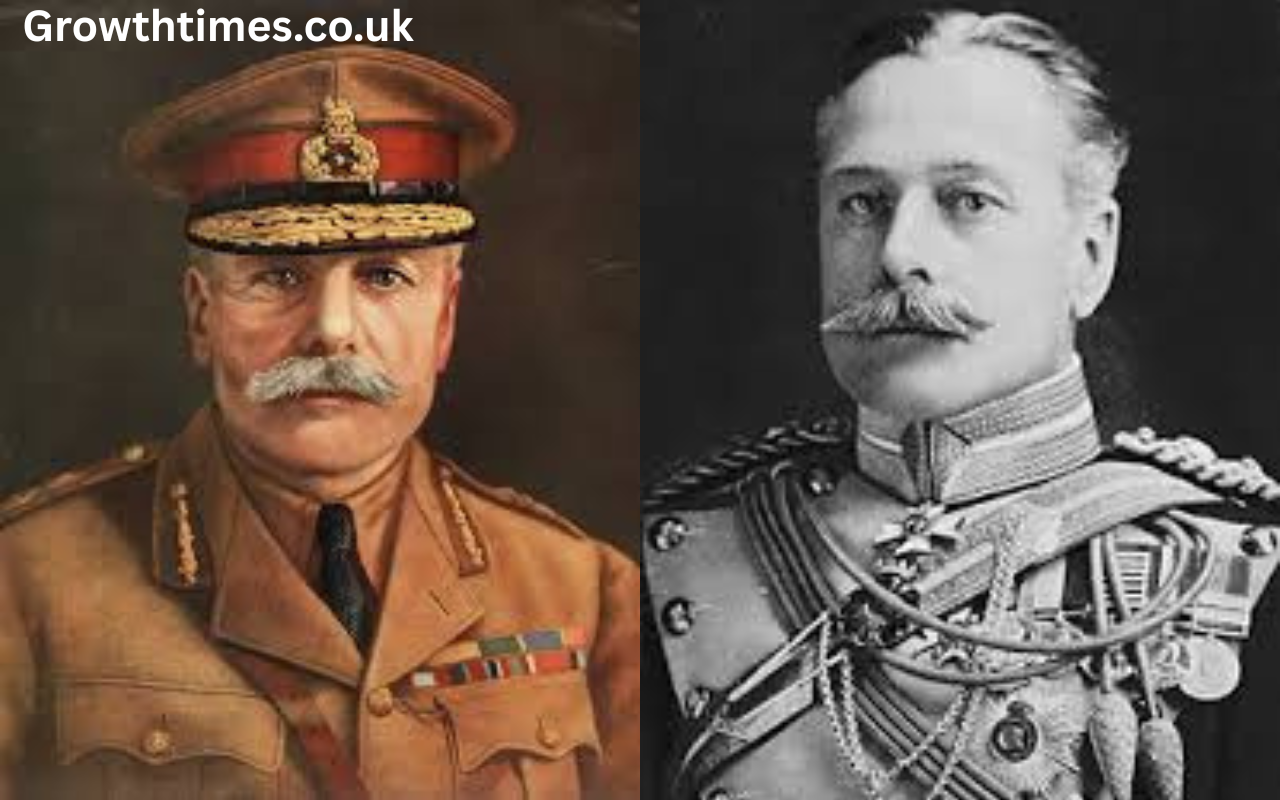
Few military leaders in modern history have inspired as much admiration, debate, and controversy as Field Marshal Douglas Haig. To some, he was the determined commander who helped secure Allied victory during the First World War through persistence and strategic leadership. To others, he became a symbol of the devastating human cost of trench warfare, earning harsh criticism for the enormous casualties suffered under his command. More than a century after the guns of the Western Front fell silent, Haig remains one of the most discussed figures in military history. His life reflects the complexity of leadership during one of humanity’s darkest conflicts, where every decision carried consequences measured in thousands of lives. Understanding Douglas Haig means looking beyond myths and popular opinions to discover the ambitious young Scottish officer, the disciplined military strategist, and the commander whose legacy continues to shape historical debate today.
Table of Contents
Toggle| Quick Facts | Details |
|---|---|
| Full Name | Douglas Haig, 1st Earl Haig |
| Known As | Field Marshal Douglas Haig |
| Birth Date | 19 June 1861 |
| Age at Death | 66 years |
| Birthplace | Edinburgh, Scotland |
| Nationality | British |
| Profession | British Army Officer, Field Marshal |
| Father | John Richard Haig |
| Mother | Rachel Veitch Haig |
| Siblings | Several siblings (from a large Scottish family) |
| Education | Clifton College; Brasenose College, Oxford |
| Military Service | British Army (1884–1920) |
| Highest Rank | Field Marshal |
| Famous For | Commander of the British Expeditionary Force during World War I |
| Major Wars | Mahdist War, Second Boer War, First World War |
| Estimated Net Worth | Not publicly documented; inherited wealth from the Haig family whisky business and later received estates and honors |
| None (Historical Figure) | |
| Twitter/X | None |
| None | |
| None |
Early Life, Family Background, and Education
Douglas Haig was born on 19 June 1861 in the elegant Charlotte Square of Edinburgh, Scotland, into a prosperous family with deep Scottish roots. His father, John Richard Haig, managed the successful Haig whisky business, one of Scotland’s best-known distilling enterprises of the nineteenth century. Financial security allowed young Douglas to receive an excellent education and experience opportunities unavailable to many children of his generation. Despite the family’s wealth, his upbringing emphasized discipline, responsibility, and hard work rather than luxury. The Haig family valued education, reputation, and public service, qualities that would profoundly influence Douglas throughout his life. Unfortunately, both of his parents died before he reached adulthood, forcing him to mature quickly and become increasingly self-reliant.
His education reflected the privileged yet demanding standards of Victorian Britain. Haig first attended schools in Scotland before continuing his studies at Orwell House and later Clifton College, where he developed academic discipline and athletic ability. After completing school, he entered Brasenose College, Oxford, studying Political Economy, Ancient History, and French Literature. Although Oxford was not a military academy, it broadened his intellectual outlook and exposed him to political thinking, European history, and leadership among Britain’s future elite. Friends and tutors described him as calm, reserved, hardworking, and remarkably organized—traits that later became hallmarks of his military career.
Rather than pursuing the family business, Haig chose a career in the British Army. At a time when the British Empire stretched across much of the world, military service was considered both honorable and prestigious. His decision demonstrated an early commitment to duty and national service rather than commercial success. In 1884, after completing his officer training, he officially joined the British Army. Few could have predicted that this young Scottish officer would eventually command millions of soldiers during the largest conflict the world had ever witnessed.
Early Military Career and Rise Through the British Army
Douglas Haig officially entered the British Army in 1884 after completing his officer training at the Royal Military College, Sandhurst. He was commissioned into the 7th (Queen’s Own) Hussars, a prestigious cavalry regiment, and soon began serving in India, which was then the most important overseas territory of the British Empire. Life in India provided valuable military experience and introduced Haig to the realities of commanding troops far from home. During these early years, he became known for his discipline, professionalism, and dedication to improving his tactical knowledge. He also developed a strong interest in cavalry operations, believing that speed, mobility, and careful planning were essential qualities for any successful military commander.
Haig’s reputation continued to grow throughout the late nineteenth century. He served during the Mahdist War in Sudan, where British forces fought to regain control of territories that had fallen under Mahdist rule. Working under distinguished commanders such as Herbert Kitchener, Haig gained firsthand experience of large-scale military campaigns. His performance impressed senior officers, who recognized his intelligence, organizational skills, and calm leadership under pressure. Rather than seeking personal glory, Haig concentrated on learning every aspect of military planning, logistics, and battlefield coordination, qualities that would later define his command style during much larger conflicts.
The Second Boer War (1899–1902) in South Africa marked another important chapter in Haig’s career. Serving under John French, he demonstrated excellent staff work while also gaining valuable combat experience. The conflict exposed weaknesses within the British Army, including outdated tactics and organizational problems. Haig carefully studied these shortcomings and became increasingly interested in military reform. His ability to combine battlefield experience with strategic planning earned him rapid promotion, making him one of the most respected young officers in the British Army by the beginning of the twentieth century.
Military Reforms and the Road to High Command
Following the Boer War, Douglas Haig spent several years in senior planning and administrative positions rather than on active battlefields. Although these assignments lacked the excitement of combat, they proved vital to his development as a military strategist. Working within the War Office, Haig played an important role in improving officer training, modernizing military planning, and helping prepare the British Army for future European conflicts. His attention to detail and long-term thinking earned him increasing respect among political leaders and senior military officials alike.
One of Haig’s most significant contributions before the First World War was his involvement in reforms that helped shape the future British Expeditionary Force (BEF). He worked on training programs, operational planning, and organizational improvements designed to ensure that Britain could respond quickly if war broke out in Europe. During this period, he also served as Director of Military Training, Director of Staff Duties, and later Chief of the General Staff in India before returning to Britain to command Aldershot Command, the country’s principal military training center. These appointments demonstrated the confidence that the British Army placed in his leadership abilities and strategic judgment.
By the summer of 1914, Europe stood on the brink of war following the assassination of Archduke Franz Ferdinand. When Britain entered the conflict in August, Douglas Haig was already among the nation’s most experienced senior officers. He initially commanded I Corps within the British Expeditionary Force under Field Marshal John French. His performance during the opening months of the war, particularly in the difficult retreat after the Battle of Mons and the First Battle of Ypres, strengthened his reputation for determination and resilience under extraordinary pressure. Within little more than a year, these qualities would lead him to the highest battlefield command in the British Army, placing the future of millions of soldiers in his hands.
Commander of the British Expeditionary Force During World War I
In December 1915, following the resignation of Field Marshal Sir John French, Douglas Haig was appointed Commander-in-Chief of the British Expeditionary Force (BEF) on the Western Front. It was one of the most demanding military appointments in history. The First World War had already settled into brutal trench warfare, where armies faced each other across hundreds of miles of fortified positions. Victory could no longer be achieved through rapid movement or traditional cavalry charges. Instead, commanders had to coordinate millions of soldiers, thousands of artillery guns, railways, supplies, aircraft, and increasingly sophisticated weapons in a conflict unlike anything the world had previously experienced. Haig inherited this enormous responsibility knowing that every major decision would affect not only Britain’s military future but also the lives of countless soldiers.
Haig firmly believed that the Western Front was the decisive theatre of the war. While some politicians and military leaders wanted to focus on campaigns in the Middle East or other regions, Haig argued that Germany’s main army had to be defeated in France and Belgium. This strategic belief shaped every major offensive he planned. He also encouraged the adoption of new military technologies, including tanks, aircraft, heavy artillery, improved communications, and coordinated infantry tactics. Although many of these innovations were still in their infancy, Haig recognized that modern warfare required constant adaptation rather than reliance on nineteenth-century methods alone.
Leading the largest army Britain had ever assembled was an immense logistical and strategic challenge. By 1916, the British Army had expanded from a relatively small professional force into a mass citizen army made up largely of volunteers and later conscripts. Training these men, supplying them with weapons and ammunition, maintaining morale, and coordinating operations with French and later American forces required exceptional organizational ability. Even many historians who criticize Haig’s battlefield decisions acknowledge that transforming the BEF into an effective modern fighting force was one of his most significant achievements.
The Battle of the Somme and the Enormous Cost of War
One of the defining moments of Haig’s career came during the Battle of the Somme in 1916. The offensive was originally planned as a joint British and French operation, but Germany’s attack on Verdun forced the British Army to shoulder a much larger share of the fighting. Haig believed that a massive offensive along the Somme River would relieve pressure on the French while weakening German defenses through sustained attacks. Months of planning, artillery preparation, and troop movements preceded what became one of the most famous battles in military history.
The first day of the Somme, 1 July 1916, remains the bloodiest day in British military history. More than 57,000 British and Imperial soldiers became casualties within hours of the attack. Many units suffered devastating losses before reaching the German trenches. Despite the terrible beginning, Haig chose to continue the offensive, believing that Germany was gradually losing strength and that persistence would eventually produce a breakthrough. The battle continued for months, resulting in enormous casualties on both sides while producing only limited territorial gains. Yet the German Army also suffered severe losses, and many military historians argue that the campaign significantly weakened Germany’s long-term ability to sustain the war.
The Somme remains one of the most controversial campaigns of the First World War. Critics argue that Haig underestimated German defensive strength and continued costly attacks long after success seemed unlikely. Supporters, however, point out that the realities of trench warfare left commanders with few attractive options and that the battle helped exhaust German resources at a crucial stage of the conflict. More recent scholarship tends to present a more balanced assessment, recognizing both the immense human cost and the strategic importance of the campaign within the broader Allied war effort.
Passchendaele, Leadership, and the Continuing Historical Debate
In 1917, Haig launched another major offensive known as the Third Battle of Ypres, or more commonly Passchendaele. His objective was to capture the Belgian coast, reduce the threat posed by German submarine bases, and continue wearing down German forces. Unfortunately, exceptionally heavy rainfall transformed the battlefield into one of the worst landscapes ever experienced in modern warfare. Soldiers struggled through deep mud while artillery, horses, and equipment became trapped in waterlogged ground, making every advance painfully slow and dangerous.
Despite worsening conditions, the offensive continued for several months before Allied forces finally captured the village of Passchendaele. The campaign became another symbol of the terrible sacrifices demanded by the First World War. Hundreds of thousands of soldiers from Britain, Canada, Australia, New Zealand, and other parts of the British Empire fought under extremely difficult conditions. Haig believed the offensive remained strategically necessary, while many contemporaries and later historians questioned whether the gains justified the losses. His determination earned both admiration and criticism, ensuring that Passchendaele would remain central to debates about his leadership for generations.
Today, Douglas Haig’s military reputation remains one of the most contested in modern history. For decades, popular culture often portrayed him as an uncaring commander responsible for needless casualties. More recent historians have argued that such portrayals oversimplify the extraordinary challenges faced by commanders during industrial warfare. Many now emphasize that Haig led a rapidly evolving army, adopted new technologies, and ultimately commanded forces that played a decisive role in the Allied victories of 1918. His legacy therefore remains complex—combining strategic success, immense human sacrifice, and continuing historical debate rather than fitting into a simple narrative of hero or villain.
The Hundred Days Offensive and Final Victory
The final year of the First World War proved to be the defining period of Douglas Haig’s military career. In the spring of 1918, Germany launched its massive Spring Offensive, hoping to defeat the Allies before large numbers of American troops arrived in Europe. German forces achieved significant early successes, forcing British and French armies to retreat across parts of the Western Front. Haig responded by issuing one of the most famous orders in British military history on 11 April 1918, urging his soldiers to stand firm with the words: “With our backs to the wall… each one of us must fight to the end.” The message became a symbol of determination during one of the most dangerous moments of the war and helped strengthen morale among exhausted Allied troops.
Once the German offensives lost momentum, Haig worked closely with Allied Supreme Commander Marshal Ferdinand Foch to launch a coordinated series of attacks that became known as the Hundred Days Offensive. Beginning with the Battle of Amiens in August 1918, British, Canadian, Australian, New Zealand, French, and American forces steadily pushed German armies backward. Unlike earlier offensives, these operations demonstrated how much military tactics had evolved. Tanks, aircraft, creeping artillery barrages, improved communications, and highly trained infantry units worked together with remarkable effectiveness. Historians generally agree that the British Expeditionary Force had become one of the world’s most capable modern armies under Haig’s command by the closing months of the war.
The Hundred Days Offensive ultimately forced Germany into retreat and contributed directly to the Armistice of 11 November 1918, which ended fighting on the Western Front. While victory belonged to all Allied nations, Haig played a central role in directing British and Commonwealth forces during these decisive operations. Many modern military historians argue that although his earlier campaigns remain controversial, his leadership during the final months of the war demonstrated significant operational skill and helped secure Allied success. The victory transformed Haig into a national hero in Britain, even though debates about his wartime decisions would continue for decades afterward.
Honors, Personal Life, and Service After the War
Following the end of the First World War, Douglas Haig received numerous honors in recognition of his service. In 1919, he was created Earl Haig, Viscount Dawick, and Baron Haig, while also receiving the thanks of both Houses of Parliament and a substantial government grant. Rather than focusing solely on personal recognition, Haig used his influence to advocate for better treatment of former servicemen. He believed that the nation had a lasting responsibility to support the soldiers who had sacrificed so much during the conflict, particularly those who returned home with physical or psychological injuries.
Haig’s personal life was relatively private. In 1905, he married Dorothy Maud Vivian, daughter of Hussey Vivian, 3rd Baron Vivian, in a ceremony held at Buckingham Palace. The couple had four children and maintained a close family life despite the pressures of Haig’s demanding military career. Friends often described him as reserved, disciplined, deeply religious, and committed to public service. Although his public image was dominated by war, those who knew him personally frequently spoke of his courtesy, modesty, and sense of duty.
Perhaps Haig’s greatest contribution after the war was his work for veterans. He became a leading supporter and the first president of the British Legion, helping establish an organization dedicated to assisting former members of the armed forces and their families. He also founded the Earl Haig Fund, which raised money through the annual sale of remembrance poppies to support veterans in need. This charitable work created a lasting legacy that extended well beyond his military career and continues to influence remembrance traditions across the United Kingdom today.
Net Worth, Income Sources, and Public Image
Unlike modern public figures, Douglas Haig did not accumulate wealth through endorsements, business ventures, or investments that are documented in today’s financial records. There is no reliable historical estimate of his personal net worth. However, Haig came from a prosperous Scottish family that owned the well-established Haig whisky business, providing him with financial security from an early age. Following the First World War, he also received a substantial government grant, a country estate, and noble titles in recognition of his service to Britain. These honors reflected the nation’s gratitude rather than commercial success.
Haig’s primary source of income throughout his life was his military career. As he rose through the ranks from cavalry officer to Field Marshal, he received the salary and allowances appropriate to each position. After the war, he devoted much of his public life to charitable work instead of pursuing personal wealth. His leadership of veterans’ organizations and fundraising efforts for former servicemen demonstrated that public service remained his priority long after he left active military command. Rather than being remembered for financial achievements, Haig’s legacy rests on his influence in military history and his commitment to supporting veterans.
Although it is impossible to calculate his wealth using modern standards, historians generally agree that Haig enjoyed a comfortable lifestyle because of his family’s resources, military salary, government rewards, and inherited estates. Nevertheless, there is little evidence that he lived extravagantly. Contemporary accounts often describe him as reserved, disciplined, and devoted to duty, characteristics that shaped both his professional reputation and his personal life.
Social Media Presence and Modern Recognition
As a historical figure who lived between 1861 and 1928, Douglas Haig had no presence on modern social media platforms such as Instagram, Facebook, X (formerly Twitter), or LinkedIn. However, his legacy continues to thrive through digital archives, museum collections, documentaries, military history websites, educational institutions, and academic research. Organizations including the National Army Museum and the Imperial War Museums regularly publish articles, photographs, letters, and historical analyses that allow new generations to study his leadership and the broader story of the First World War.
Haig’s name frequently appears in documentaries, university lectures, podcasts, and military history discussions. Historians continue to examine his battlefield decisions using newly available records, battlefield archaeology, and modern military analysis. These ongoing studies have encouraged a more balanced understanding of his command, moving beyond earlier portrayals that focused exclusively on the heavy casualties of battles such as the Somme and Passchendaele. Instead, many scholars now consider both the strategic realities of industrial warfare and the evolution of British military tactics under his leadership.
Across Britain and the Commonwealth, Haig’s memory is also preserved through memorials, museums, books, and annual Remembrance events. While some statues and memorials have attracted public debate in recent years because of differing interpretations of his wartime leadership, his historical importance remains undisputed. The discussion surrounding his legacy illustrates how significant historical figures continue to be reassessed as new evidence and perspectives emerge.
Legacy, Historical Debate, and Lasting Influence
Few military commanders have generated as much discussion as Douglas Haig. During his lifetime, he was celebrated as one of Britain’s greatest wartime leaders, receiving widespread public admiration and a state funeral attended by thousands. In the decades after his death, however, changing attitudes toward the First World War led many writers and critics to question his leadership. Popular culture often portrayed him as a commander responsible for unnecessary bloodshed, giving rise to the enduring nickname “Butcher Haig.”
Modern historians, however, have adopted a more nuanced view. While acknowledging the terrible casualties suffered during major offensives, many scholars argue that Haig commanded under extraordinarily difficult conditions during the world’s first industrial-scale war. They emphasize that he oversaw the transformation of the British Expeditionary Force into a highly effective modern army, embraced new technologies such as tanks and aircraft, and played a crucial role in the Allied victories of 1918. His leadership remains controversial, but it is increasingly evaluated within the broader military and political realities of the time rather than through simplistic judgments.
Douglas Haig died on 29 January 1928 in London at the age of 66. His funeral became a national event, reflecting the respect he commanded among many contemporaries. Today, historians continue to debate his decisions, ensuring that his life remains one of the most extensively studied careers in modern military history. Whether viewed as a determined strategist, a flawed commander, or a complex combination of both, Haig’s influence on twentieth-century warfare and military leadership remains undeniable.
Conclusion
The story of Field Marshal Douglas Haig is one of ambition, duty, controversy, and enduring historical significance. From his early years in Edinburgh to commanding millions of soldiers on the Western Front, his life mirrored the extraordinary challenges of an era transformed by global conflict. He experienced remarkable success, faced relentless criticism, and left behind a legacy that historians continue to examine from multiple perspectives.
Haig’s career reminds us that leadership during times of crisis is rarely simple. Every decision he made carried immense consequences, and his command during the First World War continues to influence military education, strategic thinking, and historical research. His dedication to supporting veterans after the war further demonstrated his lifelong commitment to those who served under his command.
As Field Marshal Douglas Haig continues to be studied by historians, military professionals, and readers around the world, his story stands as a reminder that history is rarely black and white. His life encourages us to examine the complexities of leadership, the burden of responsibility, and the lasting impact that courage, perseverance, and service can leave on future generations.
