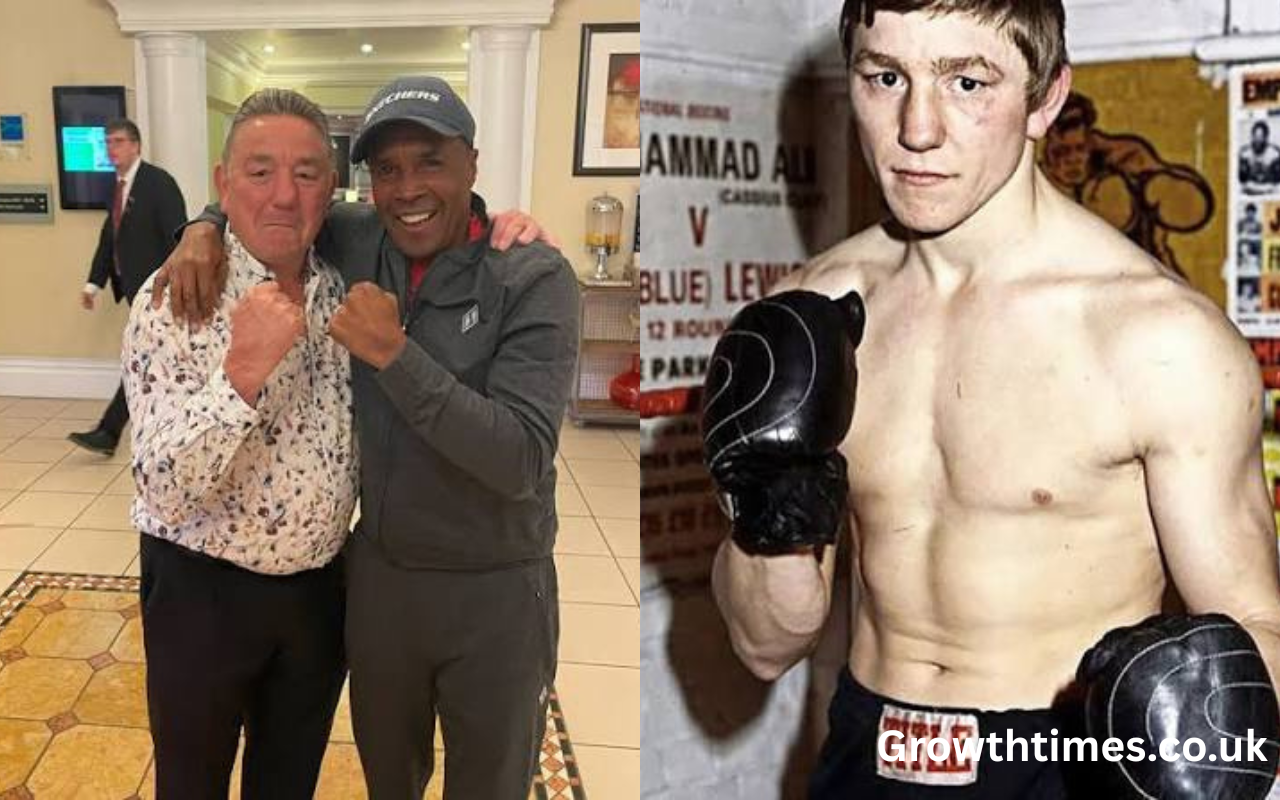
Few British boxers have earned the admiration and respect that Dave Boy Green enjoys. Known for his fearless fighting spirit, relentless determination, and humble personality, Green became one of the most exciting fighters of the 1970s and early 1980s. Nicknamed the “Fen Tiger,” he thrilled boxing fans with his aggressive style, powerful punches, and willingness to face the very best opponents in the world. Although he never captured a world championship, his remarkable career and lasting influence on British boxing have secured his place among the sport’s most respected figures.
Beyond the boxing ring, Dave Boy Green built a successful business career, dedicated himself to charity work, and became an inspiration for athletes across generations. His story is one of resilience, discipline, courage, and unwavering commitment to excellence. Whether competing against legendary champions or giving back to his local community, Green has consistently demonstrated the values that define a true sporting icon.
Dave Boy Green Quick Facts
| Fact | Details |
|---|---|
| Full Name | David Robert Green MBE |
| Popular Name | Dave Boy Green |
| Nickname | The Fen Tiger |
| Date of Birth | June 2, 1953 |
| Age | 73 (as of 2026) |
| Birthplace | Chatteris, Cambridgeshire, England |
| Nationality | British |
| Profession | Former Professional Boxer, Businessman |
| Weight Division | Light-Welterweight, Welterweight |
| Height | Approximately 5 ft 7 in (170 cm) |
| Father | Farmer (Name not publicly available) |
| Mother | Not publicly disclosed |
| Siblings | Not publicly disclosed |
| Spouse | Kay Curson |
| Children | One son and twin daughters |
| Net Worth | Estimated $2–5 million |
| Boxing Record | 41 fights, 37 wins (29 KOs), 4 losses |
| No verified account | |
| X (Twitter) | No verified account |
| Not publicly available |
Early Life and Family Background
Dave Boy Green was born on June 2, 1953, in the quiet market town of Chatteris, Cambridgeshire, England. Growing up in the beautiful Fenland countryside gave him a strong work ethic from an early age. His father worked as a farmer, and young Dave regularly helped around the family farm. Those long days of physical work developed the strength, endurance, and determination that would later become trademarks of his boxing career. Unlike many future sports stars who grow up dreaming of fame, Green’s childhood was grounded in simplicity, family values, and hard work.
At school, Dave enjoyed football and cross-country running. His athletic ability was obvious, but boxing had not yet become part of his life. Everything changed in 1967 when he joined the Chatteris Amateur Boxing Club. Under the guidance of respected trainer Arthur Binder, Green quickly discovered both a natural talent and a deep passion for the sport. His amateur career proved highly successful, as he fought in more than 100 contests and won the majority of them, giving him valuable experience before turning professional.
Professional Boxing Career: From Rising Prospect to British Champion
Dave Boy Green officially turned professional in December 1974 under the guidance of respected manager Andy Smith, beginning a journey that would establish him as one of Britain’s most exciting boxers. His professional debut came against Yotham Kunda, whom he defeated by second-round knockout, immediately demonstrating the explosive punching power that would become his trademark. Green carried the confidence from his successful amateur career into the professional ranks, winning his first fifteen fights in impressive fashion. Many of those victories ended before the final bell, earning him a growing reputation as an aggressive fighter who always looked for the knockout rather than simply outscoring his opponents. His exciting style quickly attracted fans across the United Kingdom and made him a regular attraction at major boxing venues.
As Green’s unbeaten streak continued, opportunities naturally followed. On 1 June 1976, he challenged Joey Singleton for the British light-welterweight title at the Royal Albert Hall in London. Wearing his famous tiger-skin dressing gown, a look that reinforced his “Fen Tiger” nickname, Green delivered a dominant performance filled with relentless pressure and powerful body punches. Singleton was unable to cope with Green’s intensity and retired after the sixth round, allowing the Cambridgeshire fighter to claim his first major professional championship. Winning the British title represented far more than a personal milestone—it confirmed that Green had developed into one of Britain’s elite boxers and was now ready to compete on the European stage. The victory also increased public interest in his career, with newspapers and boxing magazines praising both his courage and entertaining fighting style.
Only a few months later, Green reached another historic milestone when he defeated France’s Jean-Baptiste Piedvache to capture the European light-welterweight championship. Although he faced difficult moments during the contest, Green recovered strongly and forced his opponent to retire in the ninth round. The victory made him the first British boxer to win the European light-welterweight title and extended his remarkable unbeaten run to twenty-two consecutive professional victories. His combination of determination, physical toughness, and crowd-pleasing action transformed him into one of the biggest names in British boxing. By the end of 1976, many experts believed Dave Boy Green was ready to challenge the very best welterweights in the world, setting the stage for the defining chapter of his remarkable career.
World Title Challenges and Career-Defining Fights
After establishing himself as British and European champion, Dave Boy Green moved into world-title contention by defeating former WBC welterweight champion John H. Stracey in an unforgettable contest at Wembley Arena in 1977. The victory demonstrated that Green could compete with elite international fighters and earned him the opportunity to challenge WBC welterweight champion Carlos Palomino. The championship fight attracted enormous attention in Britain, with fans believing Green had the courage and determination to bring a world title home. Throughout the bout, Green fought bravely despite suffering heavy punishment, refusing to back away even as Palomino’s superior experience gradually took control.
Although Green ultimately lost to Carlos Palomino by eleventh-round knockout, his courageous performance earned widespread respect from boxing fans and journalists. Rather than being remembered as a defeat, the fight became an example of Green’s fearless attitude and willingness to challenge the very best competitors regardless of the odds. He refused to make excuses after the contest and immediately began rebuilding his career, displaying the resilience that defined his character throughout his professional life. His sportsmanship and determination only strengthened his popularity among British boxing supporters, who admired his honesty and fighting spirit.
Green earned another world-title opportunity in March 1980 when he travelled to Maryland in the United States to face the legendary Sugar Ray Leonard for the WBC welterweight championship. Leonard, already considered one of boxing’s brightest stars, produced a spectacular fourth-round knockout victory. Although the defeat was dramatic, Green later acknowledged Leonard’s extraordinary talent with humility and respect. Instead of allowing that loss to define him, Green remained proud of having shared the ring with two of the greatest welterweight champions of his era. Today, those championship contests remain among the most memorable moments of British boxing history and continue to highlight Green’s willingness to test himself against the world’s finest fighters.
Later Boxing Career, Retirement, and Lasting Legacy
Following the heartbreaking defeat to Sugar Ray Leonard in 1980, Dave Boy Green refused to let the setback define his career. Instead of retiring immediately, he demonstrated the same courage that had made him one of Britain’s most admired fighters. Later that year, he returned to the ring and stopped American boxer Mario Mendez in the second round, proving that he still possessed the determination and punching power that had thrilled fans throughout the 1970s. Although he was no longer competing for world titles, Green remained committed to giving supporters exciting performances every time he stepped into the ring. His willingness to continue competing reflected his deep love for boxing rather than a desire for fame or financial rewards.
Green’s final professional contest came on 3 November 1981 at the historic Royal Albert Hall in London against Reg Ford, a New York-based Guyanese boxer who had previously sparred with Thomas Hearns. During the fight, Green suffered severe cuts and swelling around his left eye. Recognising that his fighter’s long-term health was more important than one more victory, his manager Andy Smith wisely retired him during the fifth round. Green accepted the decision with dignity and gratitude, closing the curtain on a remarkable seven-year professional career. He finished with an outstanding record of 41 professional fights, 37 victories, including 29 knockouts, and only four defeats. Those statistics reflect not only his exceptional ability but also the high level of opposition he consistently faced throughout his career.
Although his professional career ended earlier than many had expected, Dave Boy Green’s influence on British boxing only continued to grow. He earned a reputation as one of the toughest, most entertaining, and most respected fighters Britain has ever produced. Fans admired his aggressive style, sportsmanship, humility, and willingness to challenge world-class opponents without hesitation. Even decades after his retirement, boxing historians regularly rank him among Britain’s finest welterweights and light-welterweights. His memorable victories over Joey Singleton, Jean-Baptiste Piedvache, Henry Rhiney, and former world champion John H. Stracey remain defining moments in British boxing history, while his fearless championship fights against Carlos Palomino and Sugar Ray Leonard continue to inspire young fighters today.
Life After Boxing: Business Success and Charity Work
Unlike many retired athletes who struggle to adjust after leaving professional sport, Dave Boy Green successfully built a second career in business. Returning to his hometown of Chatteris, he co-founded Renoak Limited, a company that grew into a respected local business, eventually serving as its chairman. His success away from the ring demonstrated that the qualities that made him a champion boxer—discipline, commitment, resilience, and leadership—were equally valuable in the business world. Friends and colleagues have often praised his practical approach, honesty, and strong work ethic, characteristics that earned him respect long after his final boxing match.
Green also devoted considerable time to charitable causes and community projects. He regularly participated in charity golf tournaments, fundraising events, and local initiatives supporting healthcare and community organisations. His commitment to helping others reflected the same generosity and humility that had made him popular with boxing fans. In recognition of his outstanding contributions to both boxing and charitable work in Cambridgeshire, he was appointed a Member of the Order of the British Empire (MBE). The honour celebrated not only his achievements inside the ring but also his dedication to improving the lives of people in his local community.
Beyond business and charity, Green remained closely connected to boxing through public appearances, interviews, sporting events, and motivational speaking engagements. He frequently shared stories from his career, offering valuable lessons about perseverance, discipline, teamwork, and overcoming adversity. His experiences fighting some of boxing’s greatest champions have made him a respected figure among sports audiences and corporate organisations alike. Even years after retirement, Dave Boy Green continues to represent the very best qualities of British sport through his integrity, humility, and lifelong commitment to giving back.
Personal Life, Family, and Interests
Away from the spotlight of professional boxing, Dave Boy Green has always valued a quiet and family-oriented lifestyle. He married Kay Curson, and together they built a happy home in Cambridgeshire. The couple have one son and twin daughters, and Green has often spoken about the importance of family support throughout his boxing career. While he was celebrated in arenas across Britain and abroad, he preferred spending time at home whenever possible. Friends have frequently described him as humble, approachable, and grounded—qualities that earned him admiration far beyond the boxing community. Despite his fame, Green has never sought a celebrity lifestyle, choosing instead to focus on the people and values that mattered most to him.
One of Green’s greatest passions outside boxing has been golf. Since retiring from professional competition, he has regularly participated in charity golf events, community fundraisers, and sporting functions. These appearances have allowed him to remain active while supporting causes close to his heart. He has also attended numerous boxing dinners, reunions, and Hall of Fame-style events, where fans continue to celebrate his remarkable career. His willingness to meet supporters, sign memorabilia, and share stories from his fighting days has helped maintain his reputation as one of Britain’s most respected former athletes. Former opponents, trainers, and boxing journalists have consistently praised his sportsmanship and friendly personality.
Despite facing the physical challenges that naturally come with a long boxing career, Green has maintained a positive outlook on life. He has openly discussed some of the health issues associated with boxing, including concerns linked to repeated blows to the head. Rather than hiding these difficulties, he has used his experiences to encourage greater awareness of fighter safety and long-term health. His honesty has been appreciated throughout the boxing community and has further strengthened his reputation as someone who genuinely cares about the wellbeing of future generations of athletes. His resilience outside the ring has proven just as inspiring as the courage he displayed inside it.
Net Worth, Income Sources, and Social Media Presence
Dave Boy Green’s estimated net worth is generally believed to be between $2 million and $5 million, although no official financial figures have been publicly confirmed. Unlike many modern athletes who earn enormous purses through pay-per-view events and sponsorship deals, Green competed during a very different era of boxing. Nevertheless, he built financial stability through a combination of successful prize money, business ventures, public appearances, motivational speaking, and his leadership role at Renoak Limited. His careful financial management and entrepreneurial mindset allowed him to enjoy long-term success after retiring from professional sport.
Green’s income after boxing has come from several sources. These include business investments, corporate speaking engagements, sporting dinners, charity events, and occasional television or media interviews discussing classic boxing contests. Because of his reputation as one of Britain’s greatest fighters, he remains a popular guest at boxing conventions and sporting celebrations. His career demonstrates that success after professional sport often depends on discipline, planning, and adaptability—qualities that Green consistently displayed throughout both his athletic and business careers.
Unlike many modern sports personalities, Dave Boy Green maintains a very limited online presence. He does not operate verified public accounts on Instagram, X (formerly Twitter), Facebook, or LinkedIn, preferring to live a private life away from social media. Instead, fans continue to follow his legacy through boxing documentaries, newspaper interviews, sports websites, and historical features celebrating Britain’s greatest fighters. Although he rarely seeks publicity, his achievements continue to generate interest among boxing enthusiasts who admire his remarkable contribution to the sport.
Recent Updates, Health Journey, and Enduring Influence
In recent years, Dave Boy Green has remained a respected figure within British boxing, even though he has largely stepped away from public life. His appearances at boxing reunions, charity functions, and sporting events continue to remind fans of the remarkable career he built through determination and courage. Green has spoken openly about living with the long-term effects of a career in boxing, including being diagnosed with chronic traumatic encephalopathy (CTE), a brain condition associated with repeated head impacts. By sharing his personal experiences, he has helped raise awareness about fighter safety and the importance of long-term medical care for retired athletes.
Although his health has presented challenges, Green has approached them with the same resilience that defined his time inside the ring. Family, friends, and members of the boxing community have continued to praise his positive outlook and determination. His willingness to discuss the realities of life after professional boxing has contributed to important conversations about athlete welfare, medical research, and improving safety standards for future generations of fighters. His courage outside the ring has earned just as much respect as the bravery he displayed during championship bouts.
Today, Dave Boy Green’s legacy extends far beyond titles and statistics. He is remembered as one of Britain’s greatest-ever welterweights, a boxer who never avoided difficult opponents and always gave everything for his supporters. Young boxers continue to study his aggressive fighting style, exceptional fitness, and relentless determination. His name remains closely connected with British boxing history, and his achievements continue to inspire athletes who believe that dedication, discipline, and perseverance can overcome even the toughest challenges.
Conclusion
Dave Boy Green’s journey from a young farm boy in Cambridgeshire to one of Britain’s most admired professional boxers is a story built on hard work, courage, and unwavering determination. Throughout his career, he consistently chose the toughest challenges, earning British and European championships while facing some of the greatest fighters of his era. His exciting performances, humble personality, and commitment to sportsmanship made him a fan favourite whose reputation has only grown stronger with time.
Outside the ring, Green demonstrated that success is measured not only by championships but also by character. His achievements in business, charitable work, and community service proved that the qualities developed through sport can create a meaningful life long after retirement. His recognition as an MBE reflected his contributions to both boxing and society, highlighting the respect he earned throughout the United Kingdom.
As Dave Boy Green continues to inspire boxing fans and future generations of athletes, his story stands as a powerful reminder that true greatness is built on resilience, humility, and an unwavering commitment to excellence. His legacy reaches far beyond the victories recorded in boxing history—it lives on in the countless people inspired by his courage, integrity, and determination to always give his very best. Whether remembered as the fearless “Fen Tiger,” a respected businessman, or a devoted family man, Dave Boy Green has secured his place as one of British boxing’s most enduring and admired legends.
